

You’ve spent the morning helping your mother get dressed, preparing breakfast, organizing her medications, and getting her ready for a doctor’s appointment. By the time everything is done, you still have your own appointment, errands, and household responsibilities to handle.
You care deeply about your loved one, yet finding time for yourself has become difficult.
For family caregivers, this can become part of the daily routine. Respite care allows a trained caregiver to step in temporarily, giving family members time to manage personal responsibilities, rest, or attend to other priorities. Depending on the situation, support may last a few hours, a full day, several days, or longer.
That flexibility can be especially useful for caregivers managing demanding schedules. Services may be provided in the loved one’s home, through an adult day program, or in a residential setting, depending on the level of care needed and the family’s circumstances.
This blog covers how in-home respite care works, the available options, how North Carolina families can find services, and what to consider before scheduling care.
Why Respite Care Matters for Your Health and Well-Being
Caregiving can take up much of a person’s time, leaving little room for sleep, personal appointments, work, relationships, or activities they enjoy. Without regular time away, caregivers may find it harder to maintain their own physical and emotional well-being alongside their caregiving responsibilities.
The scale of family caregiving shows why access to temporary support matters. According to the 2025 AARP and National Alliance for Caregiving report, 63 million Americans provided ongoing care to an adult or child with a medical condition or disability during the previous year. Nearly 1 in 4 caregivers provided 40 or more hours of care each week. For someone dedicating that much time to a loved one, having dependable help can create room for rest, appointments, work, and other responsibilities.
Respite care gives caregivers dedicated time to step away and focus on their own needs. Depending on their situation, that time may be used to:
- Attend medical, dental, or other personal appointments
- Catch up on sleep, errands, and household tasks
- Spend meaningful time with friends and family
- Exercise, pursue hobbies, or enjoy other personal interests
- Take a personal day or plan a short vacation
- Rest and recharge without having to manage their loved one’s immediate care needs
Pro Note: Taking a break does not mean a caregiver is stepping away from their responsibilities permanently. It gives them time to look after themselves so they can return to their caregiving routine with more energy and focus.
Types of Respite Care: In-Home, Day Programs, and Overnight Options
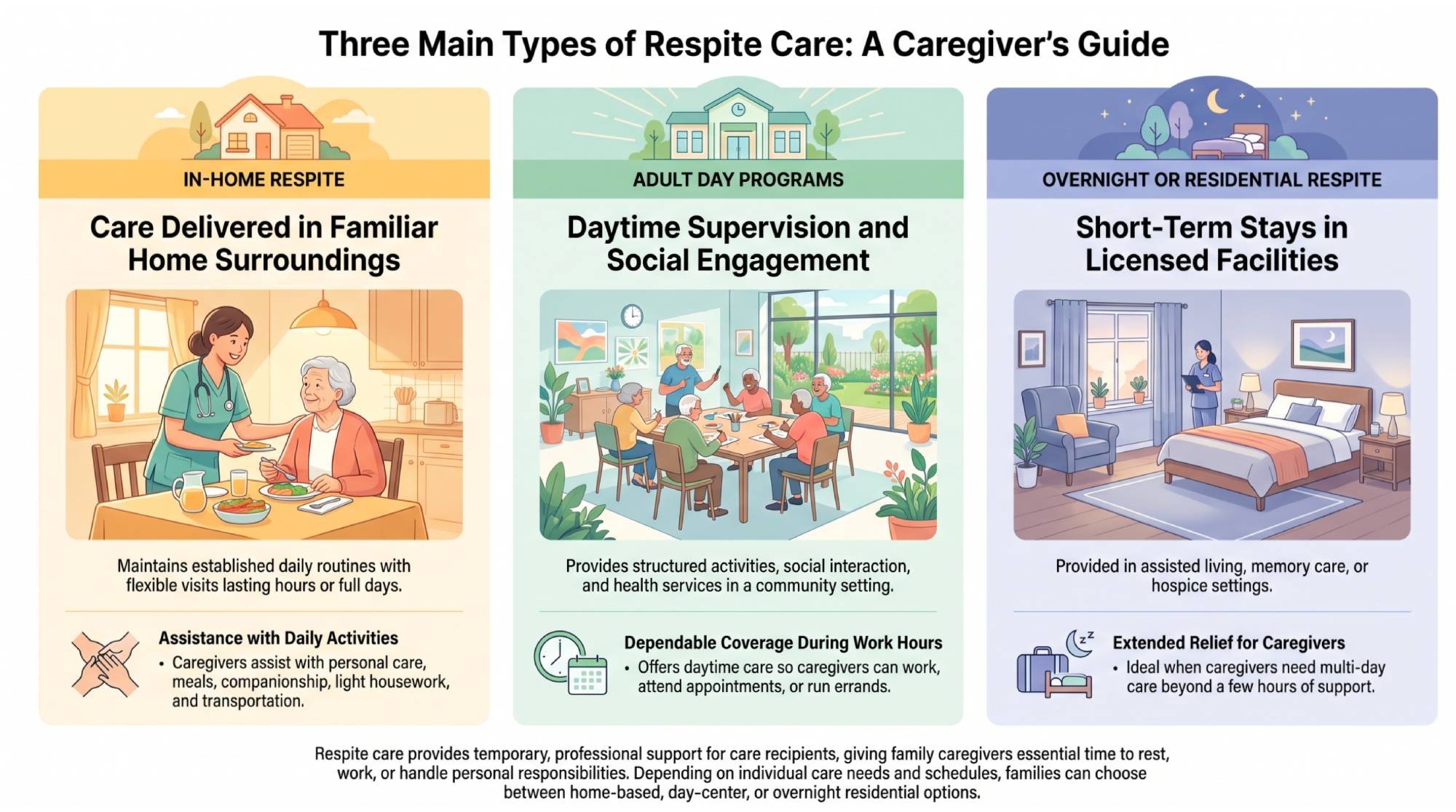
Families can choose from several forms of respite based on the care recipient’s needs and the caregiver’s schedule. Some of the examples are:
In-Home Respite
In-home respite care brings a trained caregiver into the loved one’s home, allowing them to receive support in a familiar environment. This option works well for families who want to maintain established routines while giving the primary caregiver time away. Visits can last a few hours, a half-day, or a full day.
Depending on the care plan, the caregiver can help with meals, companionship, personal care, transportation, light household tasks, and other daily activities.
Adult Day Programs
Adult day programs provide daytime supervision, structured activities, social interaction, and, in some settings, health-related services. They can give family caregivers dependable coverage while they work, attend appointments, run errands, or handle other responsibilities.
North Carolina also offers adult day and adult day health services through local providers. Eligibility and available services depend on the funding source, program requirements, and the individual’s care needs.
Overnight or Residential Respite
Overnight respite provides short-term care in an appropriate residential setting, such as an assisted living community, memory care setting, hospice facility, or another licensed program. This option gives caregivers more extended time away when a few hours or a single day of support is not enough.
Choosing between these options starts with the loved one’s care needs, supervision requirements, preferences, and the amount of time the caregiver needs away. Matching those factors with the right type of respite service can make the arrangement more comfortable and practical for everyone involved.
How to Find and Arrange Respite Care Services
Finding the right respite service starts with knowing where to look. Several local resources can connect families with qualified caregivers and help narrow down suitable options.
- Connect with your local Area Agency on Aging: These organizations can provide information about available programs, local care resources, and providers serving your area.
- Speak with your loved one’s healthcare team: Physicians, hospital social workers, discharge coordinators, and other care professionals can point you toward services that match the person’s health and daily care requirements.
- Research home care agencies in your area: Private and nonprofit providers offer respite services in many communities. Before choosing an agency, ask about caregiver screening, training requirements, supervision, insurance, and how concerns are handled.
Once you have a few providers to consider, use the initial conversation to learn how their services work. Ask who supervises caregivers, what qualifications they require, how they handle changes in care needs, and who you can contact if a problem comes up.
Detailed, straightforward answers can help you narrow down providers that fit your family’s needs.
Finding Respite Care in North Carolina, Cape Fear, and New Hanover County
North Carolina families have several state and community resources available when arranging respite care in North Carolina. State agencies, regional organizations, and local care providers can help families identify services based on location and care needs.
A useful place to begin is the North Carolina Division of Aging and Adult Services, which provides information about programs and resources for older adults and caregivers. Local Area Agencies on Aging can then help families identify nearby services, programs, and financial assistance.
Financial support can also make respite services more accessible for eligible families. The NC Lifespan Respite Program provides up to $750 in respite services per calendar year to eligible North Carolina caregivers when funding is available. Families can review the program’s eligibility requirements and current funding information before making arrangements.
For families looking for respite care in the Cape Fear region, local organizations provide different forms of caregiver support, including in-home services and facility-based care. Families researching home care services in New Hanover County can also explore providers that offer temporary assistance based on the loved one’s daily needs. Similar resources are available across Brunswick, Pender, and Onslow Counties, including residential communities that provide respite options for people living with dementia.
Before selecting a provider:
- Check licensing: Confirm that the agency has current licensing for the services it provides.
- Review caregiver screening: Ask whether caregivers undergo background checks and other screening before working with clients.
- Ask about training: Find out what training caregivers receive and whether it matches your loved one’s care needs.
- Confirm supervision: Ask who supervises caregivers and how the agency handles changes or concerns.
- Verify agency credentials: Review the provider’s qualifications and experience before scheduling care.
- Discuss the care plan: Confirm that the provider can deliver the specific assistance your loved one requires.
Before committing to a long-term schedule, it is wise for families to arrange an initial visit or shorter period of care when available. This gives the caregiver, family, and provider an opportunity to identify adjustments needed in routines, communication, or the level of support provided.
Understanding Respite Care Costs and Payment Options
Cost is a common consideration for families exploring respite services, and knowing where financial assistance comes from can make planning easier.
Respite expenses vary based on the provider, type of service, level of care, and location. Requesting current rates from local providers gives families a clearer idea of what they will pay.
Possible payment sources include:
- Medicare: Traditional Medicare generally does not cover routine respite care. Some Medicare Advantage plans include respite benefits.
- Medicaid: Certain waiver programs can help cover respite services. Check North Carolina’s current eligibility requirements.
- Veterans Affairs: Qualifying veterans can access respite benefits through available VA programs.
- Nonprofits and community programs: Local organizations sometimes provide free or reduced-cost respite based on income, eligibility, or care needs.
Newer federal programs can provide another source of assistance. Under the GUIDE Model, CMS provides participating organizations with funding for services that temporarily relieve eligible caregivers, including in-home care, adult day programs, and facility-based respite. So, check with the specific provider or plan for current coverage and eligibility details before arranging services.
Getting Started: How to Arrange and Schedule Respite Care
Imagine having a few hours to yourself while knowing your loved one is comfortable and cared for. Starting with a short respite visit can help both of you get comfortable with the caregiver before arranging longer periods of support.
Before the first visit, share key details about your loved one’s routine and care needs. Keep a written guide with:
- Daily routines and preferences
- Medication instructions
- Health conditions and medical alerts
- Meal and dietary needs
- Mobility or personal care assistance
- Emergency contacts
- Doctor and family contact details
For in-respite care, these details give the caregiver a clear reference and help keep your loved one’s routine consistent.
Frequently Asked Questions About Respite Care
How many days should a patient be in respite care?
Is respite care safe?
Can I use respite care if my loved one has dementia or a complex medical condition?
Yes. Some providers have experience supporting people with dementia, chronic illnesses, mobility limitations, or recovery needs. Families should describe the person’s condition and daily care needs before selecting a provider and ask about relevant caregiver training.
For dementia caregivers, a provider’s experience with communication, redirection, routines, and memory-related behaviors can be especially useful.
Will my loved one feel abandoned if I use respite care?
How do I know if a respite provider is trustworthy?
Planning Your Next Step With Respite Care
Respite care for caregivers provides time to rest, handle personal responsibilities, or simply take a break while a loved one continues receiving dependable support. Even a few hours of professional care can make daily caregiving more manageable.
At New Estuary Home Care, we provide personalized in-home respite support throughout the Cape Fear region. Our caregivers are carefully screened, professionally trained, and receive ongoing education in caring for older adults and individuals with cognitive impairment. As a licensed home care agency, we directly employ and supervise our caregivers.
Caring for someone you love can be deeply rewarding, but you should have support along the way. When you’re ready for a little more room to rest, reconnect, or simply breathe, contact us to explore respite care options for your family.