

Occasional forgetfulness is a normal part of aging, but normal forgetfulness vs. cognitive decline becomes a concern when memory changes repeatedly interfere with everyday tasks, conversations, judgment, or independence. Recognizing these differences helps families identify when it’s time to seek medical advice without assuming the worst.
For example, forgetting where you left your keys is different from repeatedly misplacing belongings and struggling to retrace your steps. While these examples can help families recognize potential warning signs, they are not a diagnosis. Memory changes do not automatically indicate dementia, either. This is where a healthcare professional must step forward to assess the symptoms, identify possible causes, and recommend appropriate next steps.
In this blog, we’ll explore the differences between normal forgetfulness and cognitive decline, when to seek medical advice, and how in-home care supports families.
Normal Forgetfulness vs. Concerning Memory Changes
With normal age-related memory loss, someone might occasionally forget a name, misplace an item, or need extra time to recall information. They often remember it later and continue managing everyday responsibilities.
By contrast, signs of cognitive decline in older adults include repeated confusion, difficulty following familiar instructions, or increasing trouble handling routine responsibilities. The National Institute on Aging (NIA) explains that occasional forgetfulness is normal at any age, while serious memory problems interfere with everyday activities. Similarly, the CDC notes that age-related changes, such as briefly struggling to recall a word and remembering it later, are generally frustrating rather than disruptive to daily life.
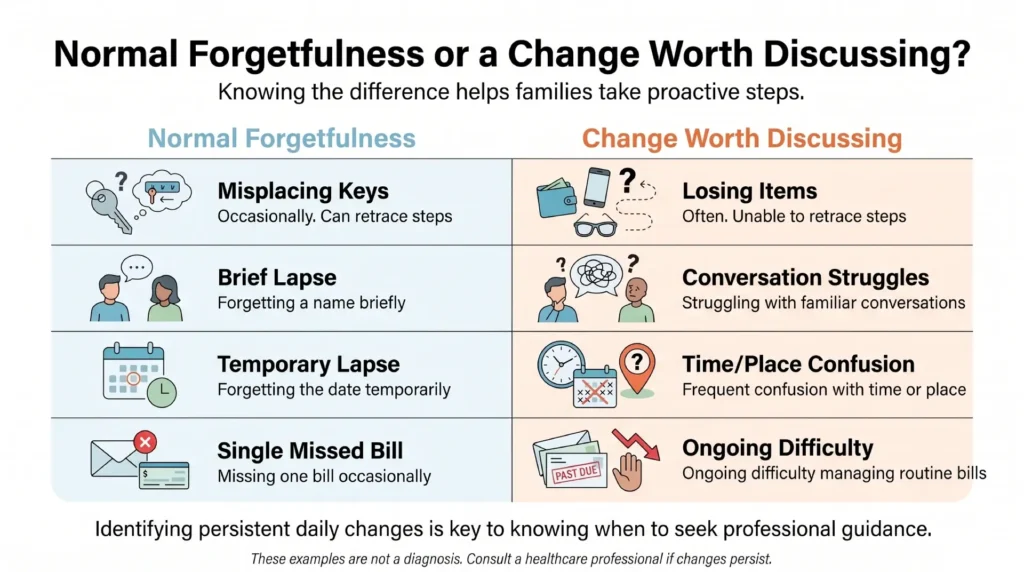
Here is a table that highlights the differences between occasional forgetfulness and memory changes that warrant a conversation with a healthcare professional:
| Often an occasional lapse | May be worth discussing with a doctor |
|---|---|
| Misplacing keys now and then | Regularly losing items and being unable to retrace steps |
| Briefly forgetting a name or word | Struggling to follow or continue a familiar conversation |
| Forgetting the date but remembering later | Repeatedly becoming confused about time or place |
| Missing a bill once | Ongoing difficulty managing routine bills |
Note: These examples do not identify the cause or establish any diagnosis. Patterns, changes over time, and their effect on daily life offer useful information for a clinician.
Changes Families May Notice at Home
Changes in memory and thinking sometimes appear through everyday routines before a family recognizes a broader concern. Watch for patterns rather than treating an isolated mistake as proof of a medical condition.
- Familiar tasks and routines: An older relative who once cooked independently might struggle to follow a favorite recipe. They might also forget appointments despite using a familiar calendar.
- Communication and thinking: Someone might repeatedly lose track of a conversation or struggle to find words they previously used comfortably. Following familiar directions might also become harder.
- Judgment, mood, and social activity: You might notice unusual difficulty making routine decisions, withdrawal from favorite activities, or changes in behavior that seem out of character.
- Safety and independence: Getting lost in a familiar neighborhood, leaving the stove on, mixing up medications, or needing new help with bathing and dressing deserves attention.
These changes deserve attention as the number of older adults living with dementia continues to grow. In fact, according to the Alzheimer’s Association’s 2025 report, an estimated 7.2 million Americans aged 65 and older were living with Alzheimer’s dementia.
How to Track Changes Without Trying to Diagnose
If you’re wondering when to worry about memory problems, begin by recording specific observations instead of testing your relative or assigning a label.
- Write down examples: Record what happened, when it happened, and how frequently it occurs.
- Notice changes over time: Describe whether the concern appears stable, less frequent, or increasingly noticeable.
- Explain the daily impact: Note whether the person needs help with meals, appointments, bills, conversations, or personal care.
- Record relevant context: Include medication changes, sleep difficulties, mood changes, and recent illnesses.
- Respect their dignity: Involve your loved one in the conversation, ask permission to share information, and avoid discussing private concerns unnecessarily.
There is no score to calculate here, and nothing on this page determines a diagnosis. Your notes simply help the healthcare professional understand what your family has observed.
Not Sure What Kind of Care Your Loved One Needs?
Memory changes and difficulties with everyday routines can raise questions about the right level of support. Take our quick home care quiz to explore potential care needs and learn more about available support options.
When to Talk With a Doctor and What to Bring
Schedule a doctor’s appointment if memory changes persist, worsen over time, or begin interfering with daily activities. The National Institute on Aging (NIA) recommends discussing memory changes with a healthcare professional, who will assess the symptoms and explore possible causes.
Memory problems do not automatically indicate dementia. Medication side effects, sleep difficulties, depression, and other health conditions also contribute to changes in memory and thinking. A medical evaluation helps identify potential causes and determine the appropriate next steps.
Before the appointment, prepare:
- Notes describing specific changes and when they began.
- A current medication list, including over-the-counter medicines and supplements.
- Questions about appropriate assessments, referrals, and follow-up care.
If possible, accompany your relative with their agreement. Share your observations calmly while giving them space to describe their own experience.
Urgent medical attention: Sudden confusion or an abrupt change in thinking or behavior needs prompt medical assessment. Seek emergency help for sudden, severe symptoms, particularly when accompanied by weakness, trouble speaking, or other possible stroke signs.
Where In-Home Care May Help
Medical evaluation helps clarify the cause of memory changes and identify the support a person needs. Alongside medical care, in-home assistance offers practical help with daily routines while allowing older adults to remain in familiar surroundings.
At New Estuary Home Care, we serve families throughout the Cape Fear Region, including Onslow, Pender, New Hanover, and Brunswick counties. Our services include:
- Companion care: Conversation, games, neighborhood outings, light housekeeping, and meal preparation.
- Personal care: Assistance with bathing, grooming, dressing, mobility, and other daily activities.
- Memory care: Personalized routines, patient communication, cognitive engagement activities, and daily living support for people experiencing memory-related challenges.
- Respite care: Short-term assistance that gives family caregivers time to rest or attend to other responsibilities.
Pro Tip: Start with an in-home care assessment from New Estuary Home Care. A Registered Nurse reviews your loved one’s needs, daily routines, and home environment to help your family identify suitable support options.
Frequently Asked Questions
Is forgetfulness a normal part of aging?
Does memory loss always mean dementia?
No. Memory problems have several possible causes, and professional evaluation helps determine what might be happening.
When should I seek medical advice?
Arrange an appointment when changes persist, worsen, or affect daily life. Sudden confusion or abrupt changes require prompt medical assessment.
Find Personalized In-Home Care for Your Loved One
Noticing memory changes in someone you love can raise difficult questions. Start with a medical evaluation to discuss your concerns and identify appropriate next steps. Keeping track of changes and their effect on daily routines can help you prepare for that conversation.
If your loved one also needs help with everyday activities, New Estuary Home Care offers personalized companion care, personal care, and memory care across the Cape Fear Region. With care plans based on individual needs and access to Registered Nurse guidance, our team helps families arrange practical support while their loved ones remain in the comfort of home.
Contact us or call us at (910) 541-1160 to discuss your family’s care needs.