When an older loved one begins needing more help with everyday life, families may find themselves weighing care options sooner than expected.
Among adults ages 65 and older, more than 90% have at least one chronic condition, which can make ongoing support at home an important part of managing daily needs.
Specialized home care provides in-home assistance based on a person’s specific medical, mobility, or personal care needs. Rather than requiring a major change in routine, this type of care allows older adults to remain in familiar surroundings while getting help with the tasks and support they need each day.
For families across the Cape Fear region of North Carolina, that can mean choosing between moving a loved one into a care facility or bringing the right support into their home. The right option depends on the person’s condition, daily needs, preferences, and level of assistance required.
Knowing what specialized care includes, who can benefit from it, and what to look for in a provider can make that decision easier. This blog breaks down the key details families should know before choosing care.
What Specialized Home Care Actually Covers
Specialized home care is designed around the needs of the individual rather than a one-size-fits-all schedule. Depending on the care plan and provider, support may include:
Personal Care Assistance: Help with bathing, dressing, toileting, grooming, transfers, and mobility.
Medication Support: Medication reminders and routine support, with clinical medication management provided by qualified nursing professionals when needed.
Health Monitoring: Observation of changes in condition and communication with family members or healthcare professionals as appropriate.
Condition-Specific Support: Care for individuals living with Alzheimer’s disease, Parkinson’s disease, diabetes, mobility limitations, or recovering from surgery.
Companionship and Daily Support: Assistance with meals, routines, errands, transportation, and meaningful social activities.
In-home care is already a common source of support for older adults and their families. According to Ankota, approximately 15 million Americans receive in-home care services. As more families rely on care at home, specialized services can help address individual needs while allowing older adults to remain in a familiar environment.
Who Needs Specialized In-Home Care
Different health and daily-living needs call for different types of assistance. Spotting those needs early can help families arrange support before everyday tasks become harder to manage.
Complex care at home can be useful in several situations, such as:
Older Adults Managing Ongoing Health Conditions
Some older adults prefer to remain at home while dealing with one or more long-term health conditions. Help with meals, medication reminders, personal routines, and getting around the house can make daily life more manageable. This type of support can provide assistance without requiring a move to a residential care setting.
People Returning Home After Surgery or a Hospital Stay
Leaving the hospital doesn’t always mean a person is ready to handle everything independently. Temporary in-home assistance can help with basic activities, mobility, medication routines, and other recovery needs. For people who require more involved support, complex care at home can provide a higher level of assistance during recovery.
Individuals Living With Dementia or Mobility Limitations
Memory-related conditions and physical limitations can make familiar routines harder to manage alone. Caregivers can provide supervision, hands-on assistance, and consistent daily routines based on the person’s needs. This support can also give family caregivers time to rest, work, or manage other responsibilities.
How a Care Plan Gets Built for Your Loved One
Good care begins with seeing the individual behind the diagnosis or care needs. Personalized home care is built around a person’s health, routines, preferences, and goals rather than relying on a standard plan. The process generally includes three key stages.
Starting With an In-Home Assessment
A registered nurse begins by visiting the client at home and reviewing their overall needs. This assessment typically covers:
Medical conditions and health history
Usual routines and personal preferences
Mobility concerns, fall hazards, and home conditions
Family priorities and care expectations
The information gathered during this visit helps shape the care plan around the client’s actual day-to-day needs.
Working With the Client and Family
The client should have a clear voice in decisions about their care, while family members can provide valuable insight into routines and changing needs. The care team considers preferences around meals, activities, schedules, and daily habits. Personalized care plans at home can then be adjusted as the client’s condition or circumstances change.
Matching the Client With Caregivers
Care providers then select caregivers based on the client’s needs and the services outlined in the care plan. A primary caregiver and backup team can review the client’s routines and care requirements before services begin. Having familiar caregivers can make daily interactions more comfortable and help establish a consistent care routine.
What Makes the Difference Between Good and Poor Home Care
The difference between dependable home care and inadequate support often comes down to how consistently a provider handles the details that affect a client’s daily experience. The table below highlights the key differences families should look for:
Care Quality Factors
Strong Home Care
Poor Home Care
Caregiver screening and training
Caregivers undergo background checks, reference checks, experience verification, and training relevant to specialized care needs.
Screening may be limited, experience may be unclear, and caregivers may receive little training for specific client needs.
Consistency in caregivers
Clients usually work with a primary caregiver and a familiar backup, creating a predictable routine.
Frequent caregiver changes can disrupt routines and make clients feel uncomfortable or confused.
Registered nurse oversight
A registered nurse remains involved, answers questions, reviews changing needs, and updates the care plan when needed.
Nurse involvement may end after the initial assessment, leaving families with limited clinical guidance as needs change.
Communication with families
Families receive regular updates and have clear channels for discussing concerns or changes in care.
Communication may be inconsistent, leaving family members unsure about daily care or changes in the client’s condition.
Care plan
Services follow a plan built around the client’s health needs, routines, preferences, and goals.
A standard plan may be used with little adjustment for the individual’s specific needs.
Response to changing needs
Care teams reassess the client and adjust services when health or daily-care needs change.
Changes may take longer to address, or families may need to repeatedly request adjustments.
Frequently Asked Questions
What is the difference between home health care and personal care at home?
Home health care is generally medically focused and may include skilled nursing or therapy ordered by a healthcare provider, while personal care focuses on daily living activities such as bathing, dressing, grooming, and mobility assistance. Payment also differs: some qualifying home health services may be covered by Medicare, while personal care is commonly paid privately or through other coverage programs.
How much does specialized home care typically cost, and what payment options exist?
Costs vary based on location, caregiver hours, services, and provider. Families should discuss pricing during an assessment and ask whether private insurance, Medicaid, long-term care insurance, or out-of-pocket payment may apply to their situation.
How do I know if my loved one is ready for home care instead of a facility?
Readiness depends on medical needs, mobility, cognitive condition, home safety, and the amount of family support available. A professional assessment can help determine whether care can be provided safely at home and what level of support may be needed.
What happens if the primary caregiver becomes unavailable?
A reputable provider should have trained backup caregivers who understand the client’s care plan. Families should ask about backup coverage before services begin so an unexpected absence does not leave a loved one without needed support.
Can home care work for someone with dementia or advanced medical needs?
Yes. Home care can support people with dementia or significant care needs when the provider has appropriate caregiver training, consistent routines, RN oversight, and a care plan suited to the person’s condition. Families should discuss specific needs with the provider before services begin.
Find the Right Support for Your Loved One
Choosing care for a loved one starts with finding out what support they actually need. A free in-home assessment can help your family evaluate daily care requirements and determine whether receiving support at home is a practical option.
For families in the Cape Fear region, finding a provider that combines personalized support with qualified caregivers can make the next step easier. At New Estuary Home Care, we offer in-home specialized care, including non-medical home care and skilled nursing services through a licensed agency.
Ready to discuss your loved one’s needs? Contact us to schedule a free in-home assessment and care consultation.
You’ve spent the morning helping your mother get dressed, preparing breakfast, organizing her medications, and getting her ready for a doctor’s appointment. By the time everything is done, you still have your own appointment, errands, and household responsibilities to handle.
You care deeply about your loved one, yet finding time for yourself has become difficult.
For family caregivers, this can become part of the daily routine. Respite care allows a trained caregiver to step in temporarily, giving family members time to manage personal responsibilities, rest, or attend to other priorities. Depending on the situation, support may last a few hours, a full day, several days, or longer.
That flexibility can be especially useful for caregivers managing demanding schedules. Services may be provided in the loved one’s home, through an adult day program, or in a residential setting, depending on the level of care needed and the family’s circumstances.
This blog covers how in-home respite care works, the available options, how North Carolina families can find services, and what to consider before scheduling care.
Why Respite Care Matters for Your Health and Well-Being
Caregiving can take up much of a person’s time, leaving little room for sleep, personal appointments, work, relationships, or activities they enjoy. Without regular time away, caregivers may find it harder to maintain their own physical and emotional well-being alongside their caregiving responsibilities.
The scale of family caregiving shows why access to temporary support matters. According to the 2025 AARP and National Alliance for Caregiving report, 63 million Americans provided ongoing care to an adult or child with a medical condition or disability during the previous year. Nearly 1 in 4 caregivers provided 40 or more hours of care each week. For someone dedicating that much time to a loved one, having dependable help can create room for rest, appointments, work, and other responsibilities.
Respite care gives caregivers dedicated time to step away and focus on their own needs. Depending on their situation, that time may be used to:
Attend medical, dental, or other personal appointments
Catch up on sleep, errands, and household tasks
Spend meaningful time with friends and family
Exercise, pursue hobbies, or enjoy other personal interests
Take a personal day or plan a short vacation
Rest and recharge without having to manage their loved one’s immediate care needs
Pro Note: Taking a break does not mean a caregiver is stepping away from their responsibilities permanently. It gives them time to look after themselves so they can return to their caregiving routine with more energy and focus.
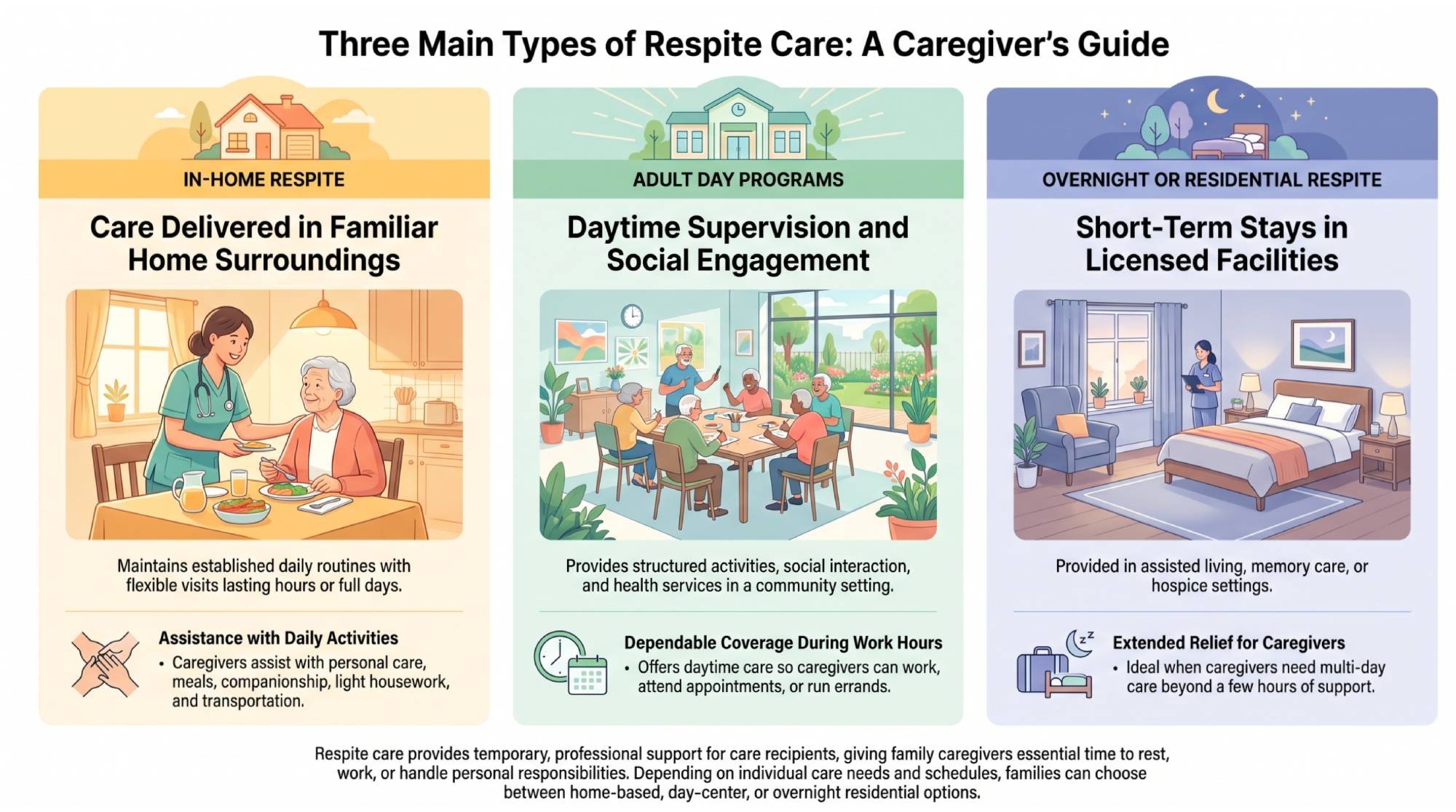
Types of Respite Care: In-Home, Day Programs, and Overnight Options
Families can choose from several forms of respite based on the care recipient’s needs and the caregiver’s schedule. Some of the examples are:
In-Home Respite
In-home respite care brings a trained caregiver into the loved one’s home, allowing them to receive support in a familiar environment. This option works well for families who want to maintain established routines while giving the primary caregiver time away. Visits can last a few hours, a half-day, or a full day.
Depending on the care plan, the caregiver can help with meals, companionship, personal care, transportation, light household tasks, and other daily activities.
Adult Day Programs
Adult day programs provide daytime supervision, structured activities, social interaction, and, in some settings, health-related services. They can give family caregivers dependable coverage while they work, attend appointments, run errands, or handle other responsibilities.
North Carolina also offers adult day and adult day health services through local providers. Eligibility and available services depend on the funding source, program requirements, and the individual’s care needs.
Overnight or Residential Respite
Overnight respite provides short-term care in an appropriate residential setting, such as an assisted living community, memory care setting, hospice facility, or another licensed program. This option gives caregivers more extended time away when a few hours or a single day of support is not enough.
Choosing between these options starts with the loved one’s care needs, supervision requirements, preferences, and the amount of time the caregiver needs away. Matching those factors with the right type of respite service can make the arrangement more comfortable and practical for everyone involved.
How to Find and Arrange Respite Care Services
Finding the right respite service starts with knowing where to look. Several local resources can connect families with qualified caregivers and help narrow down suitable options.
Connect with your local Area Agency on Aging: These organizations can provide information about available programs, local care resources, and providers serving your area.
Speak with your loved one’s healthcare team: Physicians, hospital social workers, discharge coordinators, and other care professionals can point you toward services that match the person’s health and daily care requirements.
Research home care agencies in your area: Private and nonprofit providers offer respite services in many communities. Before choosing an agency, ask about caregiver screening, training requirements, supervision, insurance, and how concerns are handled.
Once you have a few providers to consider, use the initial conversation to learn how their services work. Ask who supervises caregivers, what qualifications they require, how they handle changes in care needs, and who you can contact if a problem comes up.
Detailed, straightforward answers can help you narrow down providers that fit your family’s needs.
Finding Respite Care in North Carolina, Cape Fear, and New Hanover County
North Carolina families have several state and community resources available when arranging respite care in North Carolina. State agencies, regional organizations, and local care providers can help families identify services based on location and care needs.
A useful place to begin is the North Carolina Division of Aging and Adult Services, which provides information about programs and resources for older adults and caregivers. Local Area Agencies on Aging can then help families identify nearby services, programs, and financial assistance.
Financial support can also make respite services more accessible for eligible families. The NC Lifespan Respite Program provides up to $750 in respite services per calendar year to eligible North Carolina caregivers when funding is available. Families can review the program’s eligibility requirements and current funding information before making arrangements.
For families looking for respite care in the Cape Fear region, local organizations provide different forms of caregiver support, including in-home services and facility-based care. Families researching home care services in New Hanover County can also explore providers that offer temporary assistance based on the loved one’s daily needs. Similar resources are available across Brunswick, Pender, and Onslow Counties, including residential communities that provide respite options for people living with dementia.
Before selecting a provider:
Check licensing: Confirm that the agency has current licensing for the services it provides.
Review caregiver screening: Ask whether caregivers undergo background checks and other screening before working with clients.
Ask about training: Find out what training caregivers receive and whether it matches your loved one’s care needs.
Confirm supervision: Ask who supervises caregivers and how the agency handles changes or concerns.
Verify agency credentials: Review the provider’s qualifications and experience before scheduling care.
Discuss the care plan: Confirm that the provider can deliver the specific assistance your loved one requires.
Before committing to a long-term schedule, it is wise for families to arrange an initial visit or shorter period of care when available. This gives the caregiver, family, and provider an opportunity to identify adjustments needed in routines, communication, or the level of support provided.
Understanding Respite Care Costs and Payment Options
Cost is a common consideration for families exploring respite services, and knowing where financial assistance comes from can make planning easier.
Respite expenses vary based on the provider, type of service, level of care, and location. Requesting current rates from local providers gives families a clearer idea of what they will pay.
Possible payment sources include:
Medicare: Traditional Medicare generally does not cover routine respite care. Some Medicare Advantage plans include respite benefits.
Medicaid: Certain waiver programs can help cover respite services. Check North Carolina’s current eligibility requirements.
Veterans Affairs: Qualifying veterans can access respite benefits through available VA programs.
Nonprofits and community programs: Local organizations sometimes provide free or reduced-cost respite based on income, eligibility, or care needs.
Newer federal programs can provide another source of assistance. Under the GUIDE Model, CMS provides participating organizations with funding for services that temporarily relieve eligible caregivers, including in-home care, adult day programs, and facility-based respite. So, check with the specific provider or plan for current coverage and eligibility details before arranging services.
Getting Started: How to Arrange and Schedule Respite Care
Imagine having a few hours to yourself while knowing your loved one is comfortable and cared for. Starting with a short respite visit can help both of you get comfortable with the caregiver before arranging longer periods of support.
Before the first visit, share key details about your loved one’s routine and care needs. Keep a written guide with:
For in-respite care, these details give the caregiver a clear reference and help keep your loved one’s routine consistent.
Frequently Asked Questions About Respite Care
How many days should a patient be in respite care?
Depending on the situation, respite care can range from a few hours to a few weeks. The length of support depends on the caregiver’s needs, the care recipient’s condition, and how comfortable everyone feels with the arrangement.
Is respite care safe?
Families can reduce concerns by checking credentials, background screening, training, references, insurance, and agency licensing. A written care plan and clear emergency contact process also help the caregiver respond appropriately to changing needs.
Can I use respite care if my loved one has dementia or a complex medical condition?
Yes. Some providers have experience supporting people with dementia, chronic illnesses, mobility limitations, or recovery needs. Families should describe the person’s condition and daily care needs before selecting a provider and ask about relevant caregiver training.
For dementia caregivers, a provider’s experience with communication, redirection, routines, and memory-related behaviors can be especially useful.
Will my loved one feel abandoned if I use respite care?
Some people may initially feel uncomfortable with a new caregiver. Introducing the caregiver gradually, explaining the schedule, and keeping familiar routines can make the transition easier. A consistent caregiver may also provide companionship and social interaction that your loved one enjoys.
How do I know if a respite provider is trustworthy?
Ask about references, background checks, training, certifications, insurance, and relevant experience. A trial period can also help your family evaluate how the caregiver and loved one work together. If concerns arise, discuss them with the agency and consider other care options.
Planning Your Next Step With Respite Care
Respite care for caregivers provides time to rest, handle personal responsibilities, or simply take a break while a loved one continues receiving dependable support. Even a few hours of professional care can make daily caregiving more manageable.
At New Estuary Home Care, we provide personalized in-home respite support throughout the Cape Fear region. Our caregivers are carefully screened, professionally trained, and receive ongoing education in caring for older adults and individuals with cognitive impairment. As a licensed home care agency, we directly employ and supervise our caregivers.
Caring for someone you love can be deeply rewarding, but you should have support along the way. When you’re ready for a little more room to rest, reconnect, or simply breathe, contact us to explore respite care options for your family.
Few things feel more daunting than figuring out how to pay for home care.
Families across North Carolina are discovering that while the desire to keep loved ones comfortable at home is clear, the financial side is anything but.
According to research by A Place for Mom, the national median cost per hour for non-medical in-home care in 2025 falls around $33/hour. Care for just seven hours a week can easily cost $1,000 a month, and more advanced or full-time care can cost upwards of $6,000 per month (depending on the specifics).
Between rising costs, confusing insurance terms, and unexpected out-of-pocket expenses, it’s easy to feel lost before you even begin looking for home care services. Don’t worry: it doesn’t have to be that way!
This guide will strip away the jargon, clarify what’s actually covered, and show North Carolina families the real options available. With the right information, planning for home care can feel more like an informed decision and less like an expensive gamble.
Breakdown: The In-Home Care Cost
Home care expenses vary widely, and the final price often depends on a mix of care needs, location, and duration. Breaking these factors down makes it easier to see what might apply to your family’s situation.
Types of Home Health Care and Their Costs
The level of care your loved one requires is the biggest cost driver.
Personal and companion care includes help with bathing, dressing, meal preparation, errands, or transportation assistance. This typically falls on the lower end of the cost spectrum.
Skilled nursing or therapy services. Covers services such as wound care, medication management, or rehabilitation. Typically, this is more expensive because it requires licensed professionals.
Generally, the more specialized the in-home care, the higher the hourly rate is likely to be.
Local Rates Across North Carolina
In North Carolina, hourly home care rates can look different depending on where you live. Families in urban areas such as Wilmington often see slightly higher costs due to greater demand, staffing requirements, and regulatory standards. In rural areas, rates may be lower, though the availability of family caregivers can sometimes be more limited.
For some families, just a few hours a week of support keeps costs manageable. For others (especially when caring for someone with advanced or chronic health conditions like dementia), daily or round-the-clock care adds up quickly.
Short-Term vs. Long-Term Care
It’s also important to distinguish between short-term and long-term personal care services:
Short-term care usually follows a hospital stay, lasting a few weeks while your loved one recovers.
Long-term care can continue for months or years, helping seniors live safely and comfortably at home with consistent support.
This difference has a big impact on planning. Families may budget differently for temporary recovery needs compared to ongoing assistance, or weigh in-home costs against alternatives like assisted living facilities.
H3: Putting the Pieces Together
Every family’s situation is different. By considering the type of in-home care, local rates, and whether support is short- or long-term, you can start to shape a realistic picture of home care costs.
This clarity makes it easier to prioritize what matters most, whether that’s independence, safety, or companionship.
Agency vs. Independent Caregiver
Hiring through a licensed agency often means higher hourly rates, since agencies cover training, oversight, and the ability to provide replacement caregivers when needed. For many families, that added structure feels reassuring.
Independent caregivers (not hired through an agency) may charge less, but families take on the responsibility of scheduling, supervision, and backup coverage.
Ultimately, the best choice comes down to how much support you need, your budget, and how comfortable you are managing care directly.
Insurance and Home Care Coverage: What’s Included
Most traditional health insurance plans will only pay for certain types of home care on a short-term basis and only when there’s a clear medical need.
For example, if a senior requires skilled nursing, wound care, or rehabilitation services prescribed by a doctor, private insurance might cover these under strict guidelines and for a limited time.
However, insurance seldom covers non-medical home care. Assistance with daily activities (bathing, meal prep, light housekeeping, or friendly visiting) is usually not included in private health insurance.
This gap often leads to confusion, as families may assume more costs are covered than really are.
Long-term care insurance is another option to consider. This specialized insurance is meant specifically for long-term help with daily living tasks, either at home or in a facility.
Policies and what they cover vary, so it is wise to review any existing plans or talk to an agent about options. Long-term care insurance can lighten the financial load considerably if you purchased it in advance.
What Non-Medical Coverage Means
When investigating policies, always look at what the plan calls “custodial” or “personal” care. These terms usually mean non-medical care, which most standard insurance will not cover.
Reviewing the fine print or speaking to a plan representative can help clarify these details before starting in-home care.
Medicare Home Care: What’s Covered and What’s Not
Medicare home care is another area where expectations often differ from reality. Medicare is designed to help people over age 65 or those with certain disabilities, but its coverage of home care is quite narrow.
To qualify, care must be medically necessary, which means it involves skilled nursing care or therapy services prescribed by a doctor. The senior must be “homebound,” and services are only provided by agencies that meet strict Medicare standards.
Medicare will not pay for around-the-clock home care, meal delivery, housekeeping, or personal care if those are the only needs. This is a key point, as many families discover late in the process that long-term home support is not included when seniors only need help with daily living tasks.
Knowing the Medicare home care rules matters to avoid surprise costs. If you are unsure about your loved one’s eligibility or which services are covered in North Carolina, check with a certified Medicare resource or seek help from your local Area Agency on Aging.
Medicaid and State-Specific Eligibility in North Carolina
Medicaid eligibility in North Carolina opens a different set of support options, especially for families with limited resources.
Unlike Medicare, Medicaid may pay for personal and long-term care services at home, depending on income and medical need. This can include help with bathing, cooking, and mobility (essential support for daily living).
To qualify, there are strict income and health eligibility guidelines. Seniors must show both a limited income and a need for long-term support as verified through an assessment.
Some families explore Medicaid waiver programs in North Carolina, which allow eligible seniors to receive home care services as an alternative to nursing facility placement. These programs provide a vital bridge for families who want to keep aging parents or other family members at home.
Applying for North Carolina Medicaid
The application process can be lengthy. It involves submitting proof of income, assets, and a review of medical needs.
Local Department of Social Services offices or the North Carolina Medicaid website can guide you through eligibility and paperwork. For many in Wilmington and nearby counties, local senior centers and nonprofit agencies are also helpful allies in applying for Medicaid home care.
Out-of-Pocket Expenses and Budgeting Tips
Even with government programs and insurance, most families find they need to budget for some portion of home care themselves. Common out-of-pocket costs include personal care, companion care, and extra support hours that go beyond what insurance or Medicaid covers. Overnight, weekend, and emergency care often add to the final bill.
Here are a few budgeting strategies we often suggest:
Start by combining family caregiving (where possible) with part-time professional help. Explore free or low-cost services from community agencies like Meals on Wheels or local senior centers. Government assistance programs can defray other expenses.
Lastly, review all available options. Sometimes, veterans’ benefits, local nonprofits, or grant funds can help cover costs that standard insurance plans do not.
Tips for Managing the Cost of Care
Set a clear monthly budget and track receipts.
Discuss care priorities with your loved one to determine “must-haves.”
Shop around for services and compare options.
Ask about community services in your county—many are free or discounted for income-qualified seniors.
Managing home care costs takes planning, but small steps can make a big difference. By setting priorities, exploring local resources, and reviewing your plan regularly, families can balance quality care with planning ahead for financial peace.
Questions to Ask Before Choosing Home Care Services or Home Health Aides
Choosing the right care provider is a big decision. Here are some helpful questions to bring to your first meeting or phone call with any agency or individual professional caregiver:
What services are included in the quoted price?
Do you accept Medicare or Medicaid? If not, what payment options exist?
Are there additional fees for weekends, holidays, or overnight shifts?
Can we adjust the care plan if our needs change over time?
Asking these questions up front can prevent misunderstandings and help you budget more confidently. Being clear about insurance home care coverage and understanding the home care cost breakdown from the start puts you in control.
Start the Conversation About Home Care Costs
Understanding the real costs of home care for seniors and how insurance, Medicare, or Medicaid may help can make the planning process far less overwhelming. For North Carolina families, the right combination of resources and guidance can ease both the financial and emotional weight of these decisions.
At New Estuary Home Care, we know every family’s situation is different. That’s why we’re committed to creating truly personalized care plans.
Whether you’re comparing coverage, weighing payment options, or simply wondering where to start with specialized care, our team is here to walk you through each step with clarity and compassion.
Are you ready to talk about home health care costs? Contact us today to schedule a consultation. Together, we’ll create a care plan that balances comfort, dignity, and financial peace of mind.
Selecting senior care is about choosing kindness and comfort for someone you love.
In North Carolina, many families find that home care helps their parents or grandparents stay in the place that feels safest: their own home. In fact, an AARP survey indicated that three-quarters of those 50+ would like to stay in their current homes or communities for as long as possible.
Finding reliable home care means selecting trusted, gentle hands and kind hearts to look after someone very special to you. For families with more advanced needs, that might also include skilled nursing care, such as support with medication management, mobility, or health monitoring that helps keep your loved one safe at home.
Every home care agency is a little different, and that can feel like a big choice when you’re just beginning. Skilled nursing care can also play a crucial role in bridging the gap between hospital and home, particularly during recovery or when managing chronic conditions.
This guide will help you make an informed, confident decision about in-home care and healthcare providers. We’ll walk through which questions to ask care agencies and which red flags to look out for.
With these tools, you can find the most dependable fit for your family member and their health conditions.
What Makes a Quality Home Care Provider?
A quality home care provider stands out by treating every client as an individual, never as a case number. This begins with a team of trained staff: people who have real-world experience, compassion, and specialized skills for meeting senior needs.
Look for transparency in both communication and services, as a trustworthy agency will take time to explain how they approach care and address every question.
Another sign of a reliable home care agency is the creation of personalized care plans. An agency should collaborate with you to understand routines, medical needs, and personal preferences. Regular, open communication sets professional caregiving services apart, as does quick response time when needs change.
Licensing proves that an agency follows state and local guidelines. In North Carolina, licensed home care providers meet standards set to protect clients’ rights and safety. Strong word of mouth, consistent positive reviews, and a visible presence in the community signal long-term trust and commitment.
Evaluation: What to Ask Home Care Providers
Choosing a home care agency is a big decision, and asking the right questions can give you peace of mind. Here are some important things to consider when evaluating senior care services.
Qualifications and Training
Begin with the basics: What certifications do your caregivers have? Professional caregivers should have training in quality care for seniors, first aid, and any specialized conditions your loved one faces, such as Alzheimer’s or mobility issues.
Additionally, state health departments have requirements and regulations to consider. North Carolina law requires annual competency checks; ask the agency how this is managed.
Care Plans and Personalization
How do you create care plans? Ask agencies to walk you through the process, from the first assessment to ongoing updates.
A quality agency will develop a custom senior care plan, not a one-size-fits-all template, and adjust it as needs change over time. The plan may include support such as medication reminders, physical therapy exercises, light housekeeping, meal preparation, or companionship.
In short, you should ask about whatever may help your loved one feel safe, comfortable, and cared for during daily living at home.
Availability and Support
Is in-home support available 24/7? What happens if there’s an emergency after hours? Reliable home care agencies offer round-the-clock medical care or clear solutions for urgent needs, like overnight triage and quick access to decision-makers.
Costs and Contracts
What is included in your pricing structure? Are there extra costs beyond the base rate?
Clarify how billing works, what services might involve extra fees, and whether there’s a minimum number of hours required. Review the contract in detail, as upfront honesty builds trust.
Additionally, you may want to discuss insurance coverage. Ask if the agency is Medicare certified, as this can make certain skilled services eligible for reimbursement.
It’s also helpful to know whether they provide Medicaid services, since Medicaid may cover personal care assistance, long-term support, or other home-based needs depending on eligibility.
In general, an agency that’s transparent about what is and isn’t covered can help families plan with confidence.
References and Client Reviews
Can you provide recent client testimonials? Trusted caregiver agencies will not hesitate to put you in touch with families who have received their care. Search online for reviews, especially from Wilmington, North Carolina, or surrounding areas.
Caregiver Oversight
How is the quality of care monitored on an ongoing basis? Ask about supervision, periodic visits from nurses or managers, and whether families have input into caregiver selection and performance feedback.
A reputable agency will also explain how they maintain high-quality care in personal care assistance (things like help with bathing, dressing, or meal preparation) while preserving your loved one’s dignity and independence.
When caregivers are supported and guided well, families can feel confident that consistent, attentive care is being provided every day.
With each answer, look for openness and a willingness to address your concerns. If an agency becomes defensive or evasive, it may be a sign to keep looking.
Home Care Agency Red Flags to Watch Out For
While many agencies work with integrity, some warning signs should put you on alert. Being able to spot these vital signs early can help avoid misunderstandings or subpar health and human services later on.
Missing Licensing
Lack of licensing is a major concern. Trusted caregiver agencies will display their licenses and explain how they maintain compliance with North Carolina law.
Vague answers regarding caregiver training, background checks, or experience may mean shortcuts are being taken. It’s not worth jeopardizing your loved one’s well-being.
Unclear or Hidden Fees
Contracts that are hard to understand, have vague fee explanations, or contain hidden costs should raise immediate questions. An honest agency will break down every cost and provide sample invoices or fee schedules upon request.
High Staff Turnover
High staff turnover, especially among caregivers and skilled nursing professionals, can signal poor working conditions, low morale, or inconsistent service. Ask potential home health agencies how long their caregivers typically stay and what steps they take to retain them.
Poor Communication
Communication is the backbone of quality home care. If staff are slow to respond to questions, miss scheduled calls with you or other health care providers, or seem disorganized during meetings, these are red flags. It’s worth considering other options to avoid bad home care.
Benefits of Choosing Home Care Agencies You Can Trust
When you find the right home care provider, you can breathe easier knowing your loved one is cared for with kindness, patience, and skill. A trusted agency builds caring relationships that honor dignity and bring comfort to daily life.
Families often feel more at peace when they receive steady updates and see thoughtful coordination with doctors and other helpers. With dependable care, everyday needs like preparing meals and administering medications are handled with a gentle touch.
Ultimately, a trusted caregiver agency helps create a safe, welcoming home where your loved one can thrive. Your whole family can share in the reassurance that comes with knowing they’re in the hands of competent healthcare professionals.
How to Start the Search for the Right Agency for Your Family Member
To start the senior care search, speak with your loved one’s physician, local hospital, or social worker for personal recommendations. Friends and neighbors who have used home care can provide insights about the home health services they trust.
You can also conduct online research. Look through professional directories, including the North Carolina Division of Health Service Regulation’s home health provider listings, and check reviews for experiences relevant to Wilmington or the Cape Fear region.
It’s also recommended to schedule initial home care consultations with your top choices. Prepare your questions ahead of time and be ready to compare answers.
At the end of the day, trust your instincts and how the agency and its health care professionals respond to your concerns. Those first impressions are often telling.
Let’s Talk About Your Family’s Needs in North Carolina
Choosing a home health care agency is one of the most personal decisions you’ll ever make. This choice deserves the utmost consideration and respect, and we’re here to help with that.
Consider Our Specialized Home Health Aides
At New Estuary Home Care, we see ourselves as becoming part of your family’s support system. Our caregivers are carefully screened, thoroughly trained, and guided by years of experience serving seniors across North Carolina.
Families trust us not only because of our professionalism, but because of the compassion our in-home care agency brings into every home. From thoughtful care plans to dependable communication, we put dignity and safety at the center of everything we do.
If you’re ready to talk with a team that understands both the responsibility and privilege of caring for loved ones, we’re here to listen. Schedule a senior care consultation today to learn about our health aides and reliable home care.
North Carolina’s aging population is growing quickly, and many families are on the hunt for senior care services.
Over the next two decades, the state’s older adult population is expected to rise from 1.8 million to 2.7 million, marking nearly a 50% increase by 2041. The fastest-growing group will be those 85 and older, which is projected to more than double in that time.
This demographic shift is already changing the way families in Wilmington and across the Cape Fear region think about senior support. More older adults are living alone; roughly 43% of households with someone over 65 are single-person homes. Many are managing disabilities or chronic health conditions.
At the same time, the home care industry in North Carolina is expanding, with providers growing at an average annual rate of 4.6% and thousands of new caregiving roles projected through 2028.
For families, that means there are more options than ever before, but also more decisions to make. Personal care, medical care, and companion care each serve different needs, and the differences are not always obvious, especially during stressful times.
Below, we’ll walk through the three main types of home care services, explain what each involves, and highlight who might benefit most. Our goal is to give you clarity and reassurance as you explore senior home assistance in North Carolina.
Overview of Home Care Services
Generally, home care services provide support for people who want to stay safe and comfortable in their own homes as they age, heal, or manage health conditions. These services give seniors and people with disabilities the chance to remain independent while still getting the help they need with daily life or health challenges.
Home care can be grouped into two main categories: medical and non-medical home care services. Some individuals only need help with everyday tasks, while others require skilled medical attention or a mix of both.
There are three key types of home care services: personal care, medical care, and companion care. Each offers a specific set of services to address different needs and levels of support.
Let’s talk about them.
Personal Care Services: Supporting Daily Living
Personal care services provide hands-on help with daily routines and self-care tasks. For those who struggle with bathing, grooming, dressing, or even getting in and out of bed, personal care ensures these basic needs are met with safety and respect.
1. Examples of Personal Care Tasks
Meal preparation, light housekeeping, and walking assistance also fall under this category. For many seniors, these home health care services often make the difference between being able to remain at home and needing to move elsewhere.
2. Personal Care in North Carolina
In North Carolina, personal care is a non-medical home care service. It focuses on protecting the dignity and comfort of individuals who find some daily activities physically difficult or unsafe to do alone.
3. Who Provides Personal Care?
Personal care assistance does not require a nurse or medical license; instead, it is provided by trained in-home aides or caregivers. This support plays a crucial role for people recovering from surgery, living with chronic conditions like arthritis, or navigating limited mobility after a hospital stay.
By receiving daily living support at home, seniors or those with disabilities can retain more independence, avoid falls, and enjoy familiar surroundings.
4. Real-Life Examples
For example, someone recovering from hip surgery in Wilmington might benefit from help with bathing and dressing for several weeks. An older adult managing Parkinson’s disease could need ongoing personal care for bathing, grooming, and meal support. These tasks may seem simple, but they are vital to both well-being and a sense of self-worth.
Medical Care Services: Skilled Health Support at Home
Medical care services at home involve healthcare professionals such as registered nurses, therapists, or home health aides with specialized medical training. This clinical level of support is usually arranged when someone needs skilled care that goes beyond regular daily help.
1. Examples of Skilled Medical Support
Common examples include wound care after surgery, administering medications or injections, monitoring chronic illnesses like diabetes or heart disease, and managing recovery plans prescribed by a hospital or doctor.
2. Why Medical Home Care Matters in the Cape Fear Region
In the Cape Fear region, accessing skilled nursing care at home has become more common as hospitals look to safely discharge patients sooner. Home health nurses visit clients to provide short-term recovery support or long-term management of complex medical conditions.
This type of care is always based on a doctor’s orders and is designed to coordinate closely with the individual’s broader healthcare team.
3. When Families Choose Medical Home Care
Families often seek in-home medical support when a loved one comes home from the hospital, has a new diagnosis that requires regular monitoring, or needs professional help to handle symptoms that can’t be managed safely without clinical skill.
For instance, someone in Wilmington recovering from a stroke might need a nurse to help with medication, physical therapy, and follow-up wound care until they regain strength.
Ultimately, medical home care aims to restore health, prevent complications, and support the highest level of independence possible, right from home.
Companion Care: Emotional and Social Support
Companion care is designed to nurture a person’s emotional and social well-being rather than focusing on physical care or medical treatment.
1. Companion Care Explained: What It Involves
A companion caregiver may share conversations, enjoy hobbies together, read aloud, play board games, run errands, accompany someone to appointments or church, attend community events, or help with light housekeeping.
This type of support is especially valuable for older adults who may not need daily assistance with bathing or medication but would benefit from meaningful companionship and structured activities.
2. Why Companion Care Matters
Loneliness and isolation are serious challenges for many seniors, particularly those who have lost a spouse, live far from family, or no longer drive.
Research shows that frequent loneliness in older adults is linked to higher risks of depression and declining health. Companion care helps counter these effects by providing a consistent human connection.
Everyday Examples of Companion Care
In everyday life, this might look like watching classic movies together, taking gentle walks along Wilmington’s Riverwalk, or enjoying a favorite card game. Sometimes, simply sharing a meal with a friendly face can make all the difference.
By fostering emotional health and encouraging social ties, companion care helps seniors stay active, connected, and engaged. These connections contribute to a higher quality of life and improved overall well-being.
Comparing Personal Care vs Medical Care vs Companion Care
Choosing the right kind of home care begins with understanding what each service offers:
1. Personal Care
Personal care helps with everyday activities such as bathing, dressing, grooming, meal preparation, and mobility. This type of care allows your loved one to maintain independence while still receiving steady support with essential self-care tasks.
2. Medical Care
Medical care is delivered by skilled nurses or therapists who provide services such as medication management, wound care, chronic condition monitoring, and recovery support after illness or surgery. It is the right choice when health concerns require professional clinical oversight.
3. Companion Care
Companion care focuses on social and emotional well-being. Caregivers offer friendly conversation, assistance with errands, and engaging activities that help reduce feelings of loneliness or isolation
Many families find that a loved one benefits most from a combination of these services. For example, someone might need personal care in the morning, medical check-ins after a hospital discharge, and a companion in the afternoons to keep spirits up.
How to Choose the Right Service for Your Loved One
Selecting the right type of care means thinking about your loved one’s health, ability to move around safely, emotional well-being, and how much support your family can give. Some may only need social interaction. Others may need help with basic tasks or skilled medical attention.
Often, talking with a professional who understands the range of home care options makes it easier to build a care plan that meets your family’s unique needs. We encourage open conversations with everyone involved to ensure the right match.
Experience the Peace of Mind That Comes From Understanding Home Care
When you know the main types of home care services (personal care, medical care, and companion care), it becomes simpler to match these supports with your loved one’s needs. The right choice can bring comfort, dignity, and real peace of mind for the entire family.
At New Estuary Home Care, we recognize that every person is unique. That’s why we provide a complimentary in-home assessment with a registered nurse to help clarify what services are truly necessary.
Our home health agency serves Wilmington, Hampstead, Surf City, Leland, and the Cape Fear region. No matter where you or your loved one lives, our focus is always on customizing care so families feel safe, heard, and supported.
Take the First Step. Let’s Explore Your Options Together.
If you’re unsure where to begin, New Estuary is here to help. A caring expert will answer your questions and listen deeply to your concerns. Then, we’ll walk you through options to address whatever your loved one needs.
Call us at (910) 541-1160 or fill out our contact form today. Let’s schedule your free assessment and start building a care plan. At New Estuary Home Care, your family is our family.
Have you ever wondered what really happens when a nurse comes to your home for that first visit?
For many families, the unknown is the hardest part. The good news: a home care assessment is less about clipboards and forms, and more about creating a care plan that feels right for your senior family member.
During this visit, the nurse gets to know your loved one, talking through routines and concerns, and looking at the home through a safety lens. It’s a chance for families to share their questions, for seniors to express what matters to them, and for everyone to start building a plan for aging in place.
If you live in Wilmington or nearby in the Cape Fear region, knowing what to expect can take some of the weight off your shoulders. In this article, we’ll walk you through how New Estuary approaches assessments, why they matter, what happens during the visit, and how you can prepare.
What Is a Home Care Assessment?
Today, most seniors want to age where they feel comfortable: right in their own homes. AARP has found that at least 75% of American adults 50 and older wish to remain in their homes as they age, and that likely means opting for at-home services.
If you’re considering home care , an assessment is a careful, supportive review of a senior person’s needs, routines, and living space. Unlike a test or exam, this process is meant to help, not judge. It’s about matching the right level and type of help to each situation.
During the assessment, a registered nurse home evaluation takes place, focused on both health and daily living needs. The nurse gathers insights on a senior’s health conditions, daily challenges, and wishes for support. The home itself is part of the thorough evaluation, making sure that potential hazards or obstacles are noted.
This senior care assessment leads to a nursing assessment for home care that guides the creation of a personalized plan. Families can be confident that nothing important gets overlooked, and the recommendations truly reflect their loved one’s life and preferences.
Who Conducts the Assessment and Why?
The main professional involved in a New Estuary assessment is a registered nurse. Their clinical background allows them to look at much more than surface needs. A nurse-led care assessment can spot medical risks, medication management issues, and even subtle changes in mood or memory.
Registered nurses know how to balance healthcare expertise with warmth. They are trained to see how safe a home is, if routines are realistic, and whether extra caregiver support is needed. During a home nurse visit, they take time to listen and answer questions, making the process cooperative and reassuring.
In our agency, the trusted team of nurses comes with years of experience in both health assessment and home safety. Their goal is always to treat each senior as a whole person with respect, patience, and a focus on dignity.
Step-by-Step Home Care Assessment Process
Knowing the steps of the entire assessment process helps lower anxiety and ensures nothing takes you by surprise. Here is what happens during a typical visit:
1. Introduction & Discussion
When the registered nurse arrives, the visit begins with a friendly introduction and an explanation of what the visit involves.
This initial assessment process is about building comfort and opening the door for honest conversation. It’s a chance to share your story and for the nurse to understand how best to support you.
2. Medical History Review
The nurse then reviews your loved one’s current health status and conditions, including chronic illnesses, recent hospital stays, and any ongoing concerns. Medications are checked carefully for accuracy, and the individual’s medical history may be discussed to create a clear picture of overall well-being.
3. Daily Living Needs & Functional Limitations
Next comes a conversation about day-to-day activities and personal care tasks. This means discussing things like bathing, dressing, meal preparation, eating, mobility, and taking medications.
Talking about what feels manageable and where extra help is needed helps the nurse shape personal care services that truly fit your loved one’s life.
4. Environmental Check
The nurse will then walk through the living environment to look at safety and accessibility. They’ll check for tripping hazards, lighting, and bathroom safety features, as well as how easy it is to move through entrances and rooms.
Even small adjustments to the home environment, like rearranging furniture or adding non-slip mats, can make a big difference in fall risk prevention.
You may be surprised by the updates the nurse recommends. According to this 2020 report , only about 10% of American homes are “aging ready” with features like step-free entryways and a bedroom on the first floor, etc.
5. Care Plan Goals
This part of the visit focuses on bringing everyone’s voices together. The nurse will talk through personal care goals, balancing independence with the right level of support. It’s also the perfect time to share personal routines, hobbies, and lifestyle factors so the care plan reflects every aspect of your loved one’s life.
6. Next Steps
Before wrapping up, the nurse creates a personalized service plan that outlines the type of support, the schedule of visits, and suggested home adjustments. They’ll answer any remaining questions and make sure everyone feels clear and supported about what comes next.
What a Nurse Looks for in Home Care Assessments
At New Estuary Home Care, our nurses take a holistic approach to crafting personalized care plans. They pay close attention to health status, checking vital signs and reviewing how medications are managed. The nurse also surveys the home for senior safety inspection concerns, such as rugs that might cause trips or bathrooms that need grab bars.
Emotional and social needs are also discussed. The nurse will ask about feelings of loneliness, anxiety, or depression, and whether there is regular interaction with family, friends, or neighbors. Support systems matter, so the nurse will learn about informal caregivers, local clubs, or faith groups that could support well-being.
By looking at physical health, safety, community resources, and available help, a registered nurse’s home evaluation captures the big picture. This helps seniors receive care that truly fits.
Benefits of Having a Professional Home Care Assessment Performed
The most visible benefit of a New Estuary assessment is a care plan as unique as your loved one. Early detection of health or home safety issues can prevent accidents or hospital visits. By spotting needs early, families can act before challenges become emergencies.
There is also comfort in clarity. Families gain peace of mind, knowing professional eyes have reviewed every detail. Seniors can keep their independence longer, supported by a plan that flexes as their mental and emotional health changes.
This is why home health assessment processes are the heart of good, personalized senior care planning.
Preparing for Your Nursing Assessment: Tips for Families
A little preparation makes the assessment smoother and more helpful. Start by gathering medical documents, medication bottles, and lists of healthcare providers. Write down questions or concerns you want to discuss with the nurse during the home nurse visit.
Be open about challenges in daily life, such as trouble with stairs or remembering tasks. Honesty helps the care team address real needs. If possible, tidy the living space, ensuring all areas are available for the nurse’s quick review, especially spaces that may need safety checks.
Bringing along a family home care checklist and being willing to share helps the process focus on what matters most to you and your loved one.
Schedule Your Home Care Assessment Today
A home care assessment sets the foundation for safe, customized care at home. The process is designed to support families, not to judge or criticize, but to bring peace of mind and clarity as care begins.
At New Estuary Home Care , every visit is guided by respect, empathy, and clinical expertise. Our team of licensed professionals has years of experience supporting families across Wilmington and southeastern North Carolina, and we bring that knowledge into every home we enter.
From safety assessments to ongoing care, we’re committed to making home a place where your loved one feels secure and supported.
If you’re ready to talk through your options or schedule a nursing assessment in Wilmington or throughout southeastern North Carolina, our team is here to listen and guide you. Reach out today , and let’s build a suitable care plan together.