
How In-Home Care Helps Seniors Maintain Independence Longer

How In-Home Care Helps Seniors Maintain Independence Longer

Home is more than a place. It’s familiar routines, treasured belongings, and a sense of comfort that can’t be recreated anywhere else. For many older adults, aging at home means holding on to the independence and identity they’ve built over a lifetime.

According to a 2024 AARP report, most adults over 50 want to remain in their current homes as they age, staying connected to their communities and the life they know.

However, maintaining that independence can become difficult when daily tasks, mobility, or health changes start getting in the way. In-home care provides the right level of support at the right time, helping seniors continue living safely and happily where they feel most comfortable.

In this article, we’ll explore:

  • What in-home care includes
  • How it helps seniors stay independent longer
  • The types of home health services and support available
  • The benefits for seniors and their families
  • Answers to common questions about in-home care

What Is In-Home Care and In-Home Services?

In-home care is support provided to seniors in the comfort of their own home. Instead of moving into a facility or relying only on family, older adults receive help with everyday tasks from professional caregivers who come directly to them.

This approach allows seniors to stay where they feel most at ease while receiving the right level of assistance.

Services vary based on personal needs and health conditions. Care may include help with bathing and grooming, dressing, preparing meals, light housekeeping, and reminders to take medications. Companionship is also a key part of in-home care for seniors. A friendly visit, a shared meal, or a ride to an appointment can make a big difference in confidence and connection.

Every care plan is customized. Some seniors may only need a few hours of support each week, while others benefit from daily or overnight care. The focus of a personalized care plan is always the same: providing practical help that protects independence and promotes comfort at home.

Common areas of support include:

  • Personal care for hygiene and mobility
  • Help with meals, cleaning, and daily routines
  • Medication reminders and basic health monitoring
  • Transportation and companionship to stay engaged
  • Flexible scheduling that adapts as needs change

Why In-Home Care Is Important for Seniors

As daily tasks become harder, many older adults face a difficult trade-off: struggle through daily routines alone or move away from the home they love.

In-home care removes that trade-off. These compassionate caregivers fill the gaps aging can create while allowing seniors to keep the routines and surroundings that bring comfort and familiarity.

Support That Keeps Each Day Safer

A caregiver’s presence can prevent small issues from turning into bigger ones. Help with moving around the home lowers the chance of falls.

Medication reminders keep treatment plans on track. Even help with cooking or cleaning reduces risks from clutter, spoiled food, or household hazards. These are simple changes that support health and a better quality of life.

Connection That Protects Confidence

Just as meaningful as safety is the emotional side of aging. Having someone to share conversation, meals, or activities with makes the home feel fuller and more supported.

Seniors gain confidence knowing they don’t have to face each day alone. Instead of losing independence, they feel more secure and more in control of how they spend their time.

In-home care allows seniors to stay where they feel most like themselves, while continuing to live safely and stay engaged in daily life.

How In-Home Care Helps Seniors Maintain Independence

Independence doesn’t disappear with age. It just needs the right support. Caregivers help with daily activities such as:

  • Bathing and dressing with standby support
  • Preparing meals and light housekeeping
  • Running errands or helping with shopping

Seniors stay safer and more confident while still handling what they’re able to do on their own.

Making Everyday Life Easier

When maintaining a home becomes overwhelming, simple assistance keeps routines steady. Help with laundry, tidying, and organization means the house stays comfortable without adding strain or risk.

Independence also includes social time and personal interests. Rides to appointments, church, or local activities allow seniors to stay active in the community they love. Staying engaged supports both mood and mobility.

Together, these types of support protect independence instead of replacing it. Seniors can continue choosing how they spend their days, knowing a helping hand is there when needed.

Types of In-Home Care Services

Every senior’s needs are different. In-home care offers a range of support options that can be combined and adjusted over time. Families can choose what makes the most sense based on health, comfort, and daily routines.

Personal Care

Help with daily tasks such as bathing, grooming, dressing, and moving around the home. This support promotes both safety and confidence, especially for seniors with mobility changes or chronic conditions.

Companion Care

Friendly social time and assistance with everyday activities like conversation, hobbies, and meal preparation. Companionship helps reduce feelings of isolation and keeps seniors engaged in meaningful routines.

Skilled Care

Advanced medical support from licensed nurses or therapists. Services may include medication administration, wound care, physical therapy, and health monitoring at home. Skilled care is helpful for seniors managing more complex medical needs.

Respite Care

Short-term support designed to give family caregivers a needed break. Whether for a few hours or a full day, respite care provides peace of mind and helps prevent caregiver burnout.

These services can stand alone or blend together. As needs change over time, care plans can be updated to provide the right level of support, without requiring a move away from home.

Benefits of In-Home Care

Choosing in-home care brings reassurance to both seniors and their families. With the right support, older adults can continue living safely and comfortably in the place that feels most like home.

Caregivers help protect independence while offering structure and companionship throughout the day. Here are some of the key benefits families appreciate:

  • Seniors stay in familiar surroundings, which supports comfort and confidence
  • Daily routines continue, including meals, hobbies, and favorite activities
  • Help with mobility and medication reduces the risk of accidents or health issues
  • Companionship encourages a positive outlook and social connection
  • Family caregivers get relief, knowing a trusted professional is there to help

In-home care makes life easier without taking away independence. It offers a path forward that keeps home at the center of aging — not as something left behind.


FAQs About In-Home Care

What is included in in-home care services?
In-home care can include help with bathing, dressing, meals, light housekeeping, and medication reminders. Some seniors also receive companionship, transportation, or skilled nursing care if needed. Support is personalized based on comfort and health goals.
How do I know if my loved one needs in-home care?

Changes in mobility, difficulty managing meals or medications, more frequent falls, or increased loneliness can be signs that extra support would help.

A professional care assessment is the best way to find guidance and a plan that fits your family’s needs.

Can in-home care be customized to individual needs?
Yes. Care plans are flexible and can increase or decrease over time. Families can choose everything from a few hours of help each week to full-day or overnight support.
How does in-home care help seniors stay independent?
Caregivers encourage seniors to do what they can safely, while stepping in only where help is needed. This balance supports confidence, routine, and the comfort of staying in familiar surroundings.

A Safe Path to Independence at Home

Staying independent isn’t about doing everything alone. It’s about having the support needed to keep living life on your own terms. For many seniors, that means remaining in the home they love, surrounded by comfort and familiarity.

In-home care gives families a practical way to make that possible. From help with daily routines to meaningful companionship, the right care plan protects confidence, dignity, and a strong sense of self.

If you’re considering support for a loved one in the Cape Fear Region, New Estuary Home Care is here to help. Our caregivers provide personalized care rooted in respect and compassion. Our goal is to help seniors enjoy more good days at home, whether that’s in New Hanover, Pender, or Onslow County.

Everyone deserves to feel secure and independent. Let’s work together to make home the best place to be. Contact us today!

How In-Home Care Helps Seniors Maintain Independence Longer

Top 10 Fall Prevention Tips for Seniors Living at Home

One small change, like removing a throw rug or adding a grab bar, can mean the difference between a quiet evening at home and a trip to the ER.

If you’ve noticed a loved one reaching for furniture to steady themselves, hesitating on the stairs, or shuffling through dim hallways, now is the time to act.

Falls at home are a leading concern for older adults in North Carolina and across the country. Each year, the Centers for Disease Control reports that about 3 million emergency department visits occur due to older people’s falls.

The encouraging news: Many of these falls never have to happen. With practical adjustments to the home and a few steady habits, families can cut the risk in a big way and help aging loved ones stay where they’re happiest: at home.

Proactive steps help seniors stay independent, confident, and active in familiar surroundings. When families stay alert to changes in walking, balance, or vision, loved ones enjoy more good days and fewer worries about sudden setbacks or serious injuries.

Here are ten hands-on fall prevention tips every North Carolina family should consider when supporting aging parents or relatives.

1. Remove Tripping Hazards Around the Home

Loose rugs, curled edges of mats, cords, and general clutter cause countless falls. Start with walkways, including hallways, kitchen paths, bedroom routes, and the space between the bed and bathroom. Secure or remove area rugs, tape down edges, and move cords behind furniture.

Rearrange furniture to open wider walking lanes so walkers and mobility aids move freely. Pick up small items (shoes, pet toys, baskets, magazines) that tend to collect on floors and stairs.

Spot-level changes matter: If one room drops to another (for example, tile to hardwood or sunken living room transitions), mark the edge with contrasting tape or a low-profile transition strip. Level uneven thresholds where possible for a simpler, safer floor plan.

2. Improve Lighting in Key Areas

Dim lighting hides hazards. Swap in brighter, long‑life bulbs, especially in entryways, hallways, stairwells, the kitchen, and bathrooms. Use night lights that switch on automatically after dark so seniors never walk through a dark hallway to the bathroom.

For those with limited mobility, place night lights with motion sensors in hallways to cut down on nighttime stumbles. Consistent, glare‑free lighting helps seniors see thresholds, spills, and other leading causes of falls before a foot catches them.

3. Install Grab Bars and Non-Slip Mats in Bathrooms

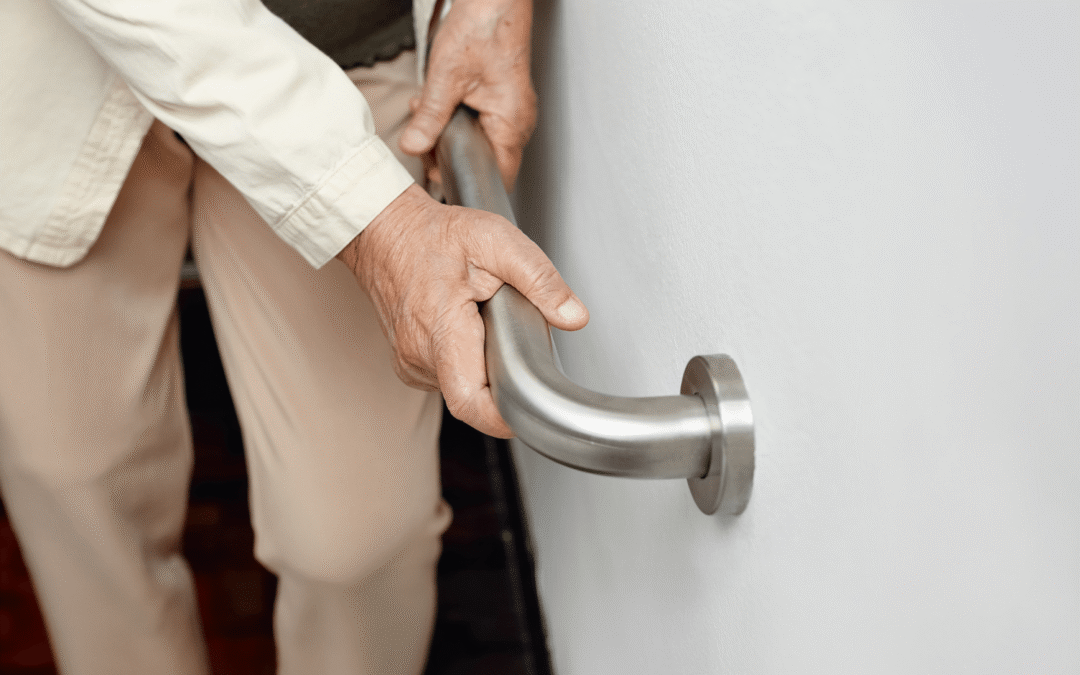
Bathrooms combine water, hard surfaces, and tight spaces—prime conditions for a fall, especially for seniors who live independently. Install sturdy, weight‑rated grab bars near the toilet and inside the shower or tub. (Note: Towel bars are not a safe part of any fall prevention plan.)

Place non‑slip mats or adhesive strips both inside the tub/shower and on the floor just outside the wet area. A shower chair or transfer bench adds stability for those who tire easily or have limited balance.

Most of these items are available through local hardware stores, medical supply shops, or through your home care provider. A few simple bathroom upgrades can prevent some of the most serious fall injuries.

4. Avoid Step Stools and Ladders

Reaching overhead is a major fall trigger. Move everyday items (such as dishes, medications, towels, and grooming items) to waist or shoulder height. Use lower shelves, rolling carts, or countertop baskets for daily essentials.

If something is stored high, ask for help rather than reaching, climbing, or balancing on a chair. Make it a house rule: no step stools or ladders for anyone at fall risk.

5. Encourage Supportive Footwear

Good shoes = better footing, and the reverse is just as true. Recent studies have indicated that a large percentage of older adults (72%) wear ill-fitting shoes.

Even more concerningly, the percentage of those who experienced a fall in the previous 6 months was higher among those wearing ill-fitting footwear than those wearing correctly fitting shoes on at least one foot.

Encourage closed‑toe, low‑heel shoes with non‑slip rubber soles and secure fastening (laces, Velcro®, or strap). Avoid backless slippers, loose sandals, or walking in socks on hard floors.

Gentle reminders help this habit stick. Keep a “go‑to” pair by the bed and another at the main door. Supportive footwear is a daily layer of fall protection with every step.

6. Promote Daily Exercise for Strength and Balance

Gentle movement improves both strength and stability. Encourage regular physical activity such as short walks, tai chi, or simple chair yoga. These exercises boost muscle tone and balance, which lowers the chances of falling.

If possible, involve a caregiver or explore programs offered at local community centers or senior groups in your area. Physical therapists can recommend personalized exercises adjusted for specific abilities or medical conditions.

Over time, stronger bodies lead to fewer risk factors for falls and better overall health.

7. Review Medications with a Healthcare Provider

Some prescriptions and combinations of drugs can cause dizziness, drowsiness, blurred vision, or drops in blood pressure when standing. That’s a recipe for falls.

Set a recurring medication review (at least once a year, sooner if new meds are added). Ask: Are any of these making me light‑headed? Sleepy? Unsteady? Doctors and pharmacists can adjust timing, dosage, or alternatives when side effects raise fall risk.

Keep a written medication list at home and share it with caregivers so everyone is working from the same page.

8. Stay on Top of Vision and Hearing Checks

Balance depends on more than strong legs. If your loved one can’t clearly see a step or hear someone alerting them to a hazard, the risk of falling increases.

Additionally, the National Council on Aging reports that people with vision loss have almost twice the risk of falls as adults without vision impairment. People with hearing loss have nearly three times the risk of falling compared to those with normal hearing.

Make annual eye exams and hearing tests part of their routine care, especially if you’ve noticed changes in how they move or respond to their environment. Encourage them to wear their updated glasses, clean lenses regularly, and use hearing aids as prescribed.

Clearer vision and sharper hearing help older adults stay aware of their surroundings—and that awareness plays a big role in safer, steadier movement.

9. Keep Frequently Used Items Easily Accessible to Older Adults

Limit bending, twisting, and stretching. Place frequently used items—phone, glasses, remote, walker tips, reading materials, medications—at mid‑level shelves, bedside surfaces, or waist‑high drawers.

Label storage spots so things return to the same place. Consistent placement reduces risky reaching and makes the home easier to manage for both seniors and caregivers.

10. Consider a Professional Home Safety Assessment

Some hazards are easy to miss when you or your loved one lives with them every day. That’s where a trained eye helps.

At New Estuary Home Care, every new client relationship begins with a safety conversation, often including an in‑home review of fall risks. We look at flooring transitions, lighting, bathroom access, mobility aids, medication routines, and daily traffic patterns through Hampstead homes.

From there, we create a practical safety action list you can tackle in stages. Our registered nurses and care team can:

  • Recommend grab bars, ramps, seating, and adaptive equipment.
  • Identify medication side effects that may affect balance.
  • Coach safe transfers from bed, chair, or toilet.
  • Monitor changes in gait, cognition, or strength that raise fall risk.
  • Provide hands‑on support with bathing, dressing, and mobility when needed.

Families across the Cape Fear region turn to us for steady help that keeps loved ones safer at home. This can all be overwhelming, but our home care for seniors makes it feel easier.

Book a Fall Safety Consultation & Make Your Home Safer

Taking small, consistent steps today creates a much safer tomorrow. Each of these strategies helps prevent falls, protect independence, and improve quality of life for seniors across North Carolina.

Home care fills the gap between doctor visits and family drop‑ins, especially when mobility, memory, or medication changes increase the chance of a fall.

At New Estuary Home Care, we bring RN‑guided planning and compassionate caregivers to your doorstep. Through our at-home assessments, our health care providers also help spot risks early, put practical fixes in place, and provide daily support that lets loved ones age in place with confidence.

Contact us today to schedule a fall safety consultation and start building a safer home for your senior family member.